Posts

That laughter did not just echo in the air...

Image
There was a time I spoke of my dreams the way a child speaks of the stars softly, innocently, with affection in my voice.  I shared them not as a burden, not as a demand, but simply as a piece of my heart. And somewhere along the way, my dreams were misunderstood, and the very thing I had trusted with affection was turned into something to laugh at. That laughter did not just echo in the air, it echoed inside my chest. And something fragile within me shattered quietly. My intention had been pure. My words had been gentle. But still, they were misunderstood. So slowly I learned to hold my heart back, to keep my dreams folded within my silence. Today, while standing in prayer, I spoke of those same dreams again but this time only to Allah. And suddenly I understood something. Those dreams were never meant to be carried by the world. Where my sincerity was misunderstood, Allah understood it before I even spoke. Where my heart once felt small, He made it feel seen. For I always knew th...

The story of Khawlah bint Thalabah (RA)...

Image
The Story of Khawlah bint Thalabah (RA): The Woman Allah Heard from the Heavens Khawlah bint Thalabah (RA) wasn’t a warrior on the battlefield nor a leader of armies, but her voice changed the course of divine law, and her plea was heard not just by the Prophet ﷺ, but by Allah Himself. ●Who Was Khawlah bint Thalabah? Khawlah bint Thalabah (RA) was a noble woman of the Ansar, married to Aws ibn al-Samit, the brother of the famous companion Ubadah ibn al-Samit. She was known for her intelligence, strength of character, and deep faith in Allah. Despite living in a society that gave little voice to women, Khawlah (RA) would not remain silent when faced with injustice—and because of her courage, Allah revealed verses in her defence that are recited to this day. ○The Incident of Zihār One day, in the heat of an argument, Khawlah's husband Aws ibn al-Samit angrily said to her: > "You are to me like the back of my mother." In Arab culture at that time, this statement was known...

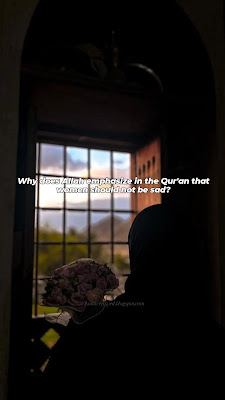
Women should not be sad.

Image
Imagine moonlight whispering secrets to a flower bowed by dew. That's the tenderness in Allah's words to women in the Quran:  " Do not be sad ."  These aren't just words; they are luminous embraces meant to soothe the soul. See how gently He speaks:  "So that her eyes may find coolness and she would not grieve." (Al-Qasas)  It's like a soft hand wiping away tears.  Again,  " That their eyes may find comfort and they may not grieve." (Al-Ahzab)  A promise of solace. Even in moments of great trial,  "Do not grieve," (Maryam) a whisper of hope.  And again, a double blessing: "Do not fear and do not grieve." (Al-Qasas) Why this repeated tenderness? Because Allah, in His infinite wisdom, understands that a woman's sorrow resonates deeply. It's not a fleeting shadow, but a storm that can shake her very core, dimming her light, weakening her strength, and stealing her peace. He sees the delicate architecture of her hear...

The echoes of those lies...

Image
The stories that I told myself to ease the lonely ache now haunt my waking moments, the promises they break. •The phantom comfort, woven in the night, Now claws at dawn, and steals away the light. •I built a fortress, from illusions spun, But shadows creep, and battles are begun. •Each whispered 'maybe,' each imagined grace, Returns a specter, in this empty space. •The echoes of those lies, a constant, chilling sound, Where solace once resided, now only wounds are found.   •The painted smiles, the words I longed to hear, Now twist and mock me, fueled by rising fear. •My heart, a stage where fantasies once played, Now holds a theater, where truths are re-betrayed. •The warmth I sought, within my crafted dream,  Has turned to frost, a cold and bitter gleam.

I peered into Jannah and saw that the majority...

Image
RasoolAllahﷺ farmate hain:  "Maine Jannat mein jhank kar dekha to Jannatiyon mein ziyadati gareebon ki nazar aayi, aur maine Dozakh mein jhank kar dekha to Dozakiyon mein kasrat avraton ki nazar aayi." Ye hadees humein do aham baatein samjhati hai:  1. Jannat mein Ghareebon ki Aksariyat   Nabi Kareemﷺ ne jab Jannat mein jhank kar dekha to wahan zyadatar ghareeb log the. Iska ye matlab nahi ke sirf ghareeb log Jannat mein jayenge, balki iska maqsad ye hai ke jo log duniya mein tangdasti aur mushkilat ke bawajood Allah ka shukr karte hain, sabr se kaam lete hain, aur apni zindagi deen ke mutabiq guzarte hain, unka ajar Jannat hai.  Islam mein ameer hona buri baat nahi, lekin ameer log jab maal ka ghamand karte hain, Allah ki ibadat se door hote hain, ya gareebon ki madad nahi karte, to unke liye musibat hoti hai. Isliye, aksar gareeb log sabr aur shukr ki wajah Se Jannat mein zyada honge.  2. Jahannam mein Auraton ki Kasrat  Is hadees ka ye matlab nahi hai ke...

Ramadan Mubarak✨️

Image
As we embark on this sacred journey of Ramadan, may Allah shower His blessings upon you and your family. May your days be filled with piety and your nights with tranquillity. Ramadan Mubarak!✨️

Allah, The most merciful.

Image
The sea did not drown Musa. The fire did not burn lbrahim. The knife did not kill Ismaeel. The whale did not eat Yunus.  Be with Allah - Allah will be with you.  Having a hard time?  Close your eyes, take a deep breath and say:  Ya Allah,  I know it's your plan. Just help me through it. " She raised her hands and cried to her Lord, "Ya Allāh, You are my only hope." Do not lose hope in Allah. He is the only one who does not break His promises. Lesson from Surah Yusuf  ● Dreams come true, if Allah wills  ● Never lose hope   ● Keep making dua "The door that Allah closes is your protection, not your curse." A hand lifted to Allah swt  is never returned empty. Allah is more compassionate than a thousand shoulders and a thousand bonds, Allah stays when no one remains. Bibi Aisha Siddiqa (may Allah be pleased with her) was a young woman, her heart heavy with a burden of guilt. She had made a terrible mistake, one she believed was beyond forgiveness...